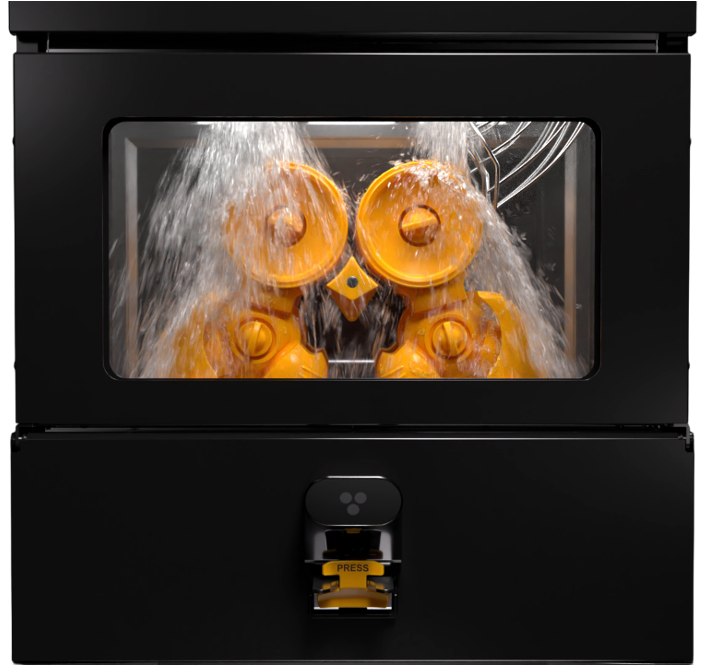
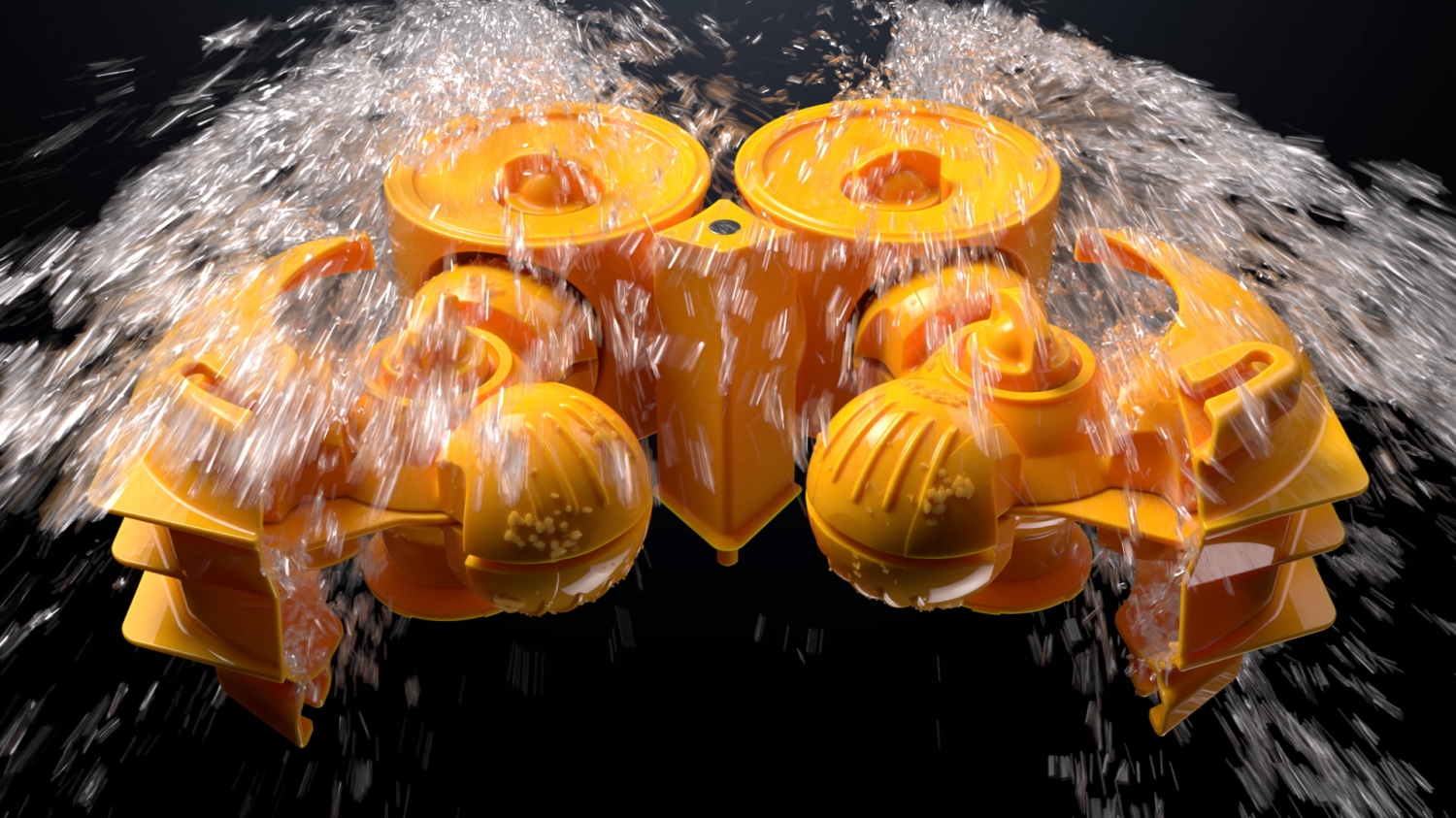
The first self-cleaning commercial juicer. A new hygiene standard for the global foodservice industry.
World’s first self-sanitizing juicer— and the problem no one had solved before
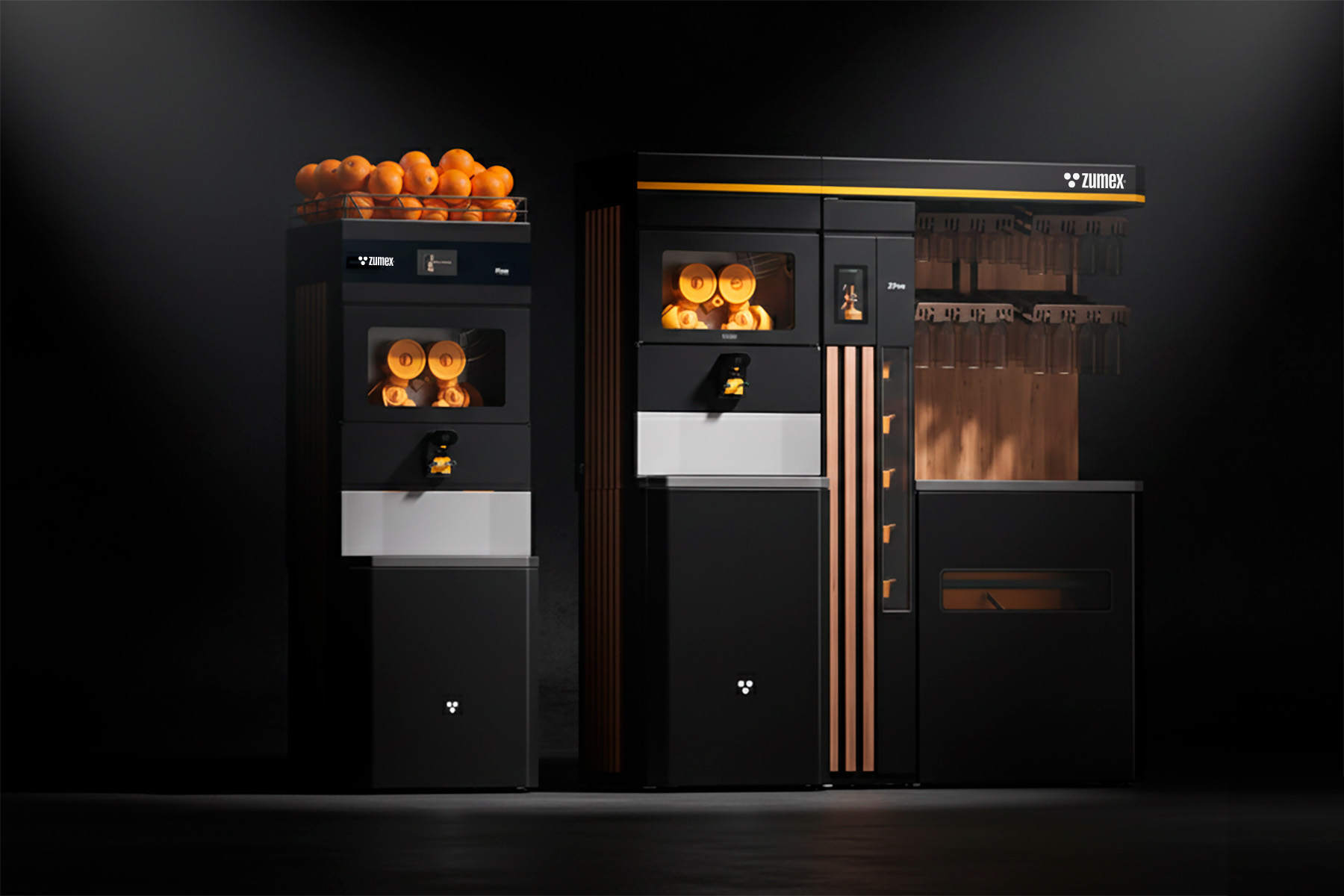
In professional food retail, cleaning the juicer is a daily ritual nobody questions. It takes time, depends on whoever is working that shift, and introduces a hygiene variable that’s hard to control at scale. The industry had accepted it as a given.
At Zumex, we decided it was a design problem worth solving.
As Chief Innovation Officer, I led the team through a three-year process — starting with field research, moving into ideation, and making a deliberate structural decision before prototyping: embedding engineers inside the innovation team as a research phase, not a handoff. That integration is what made the patented self-cleaning system technically viable without sacrificing the user experience.
The result didn’t just improve a product. It opened a new category — and redefined what a professional juicer can be expected to do.
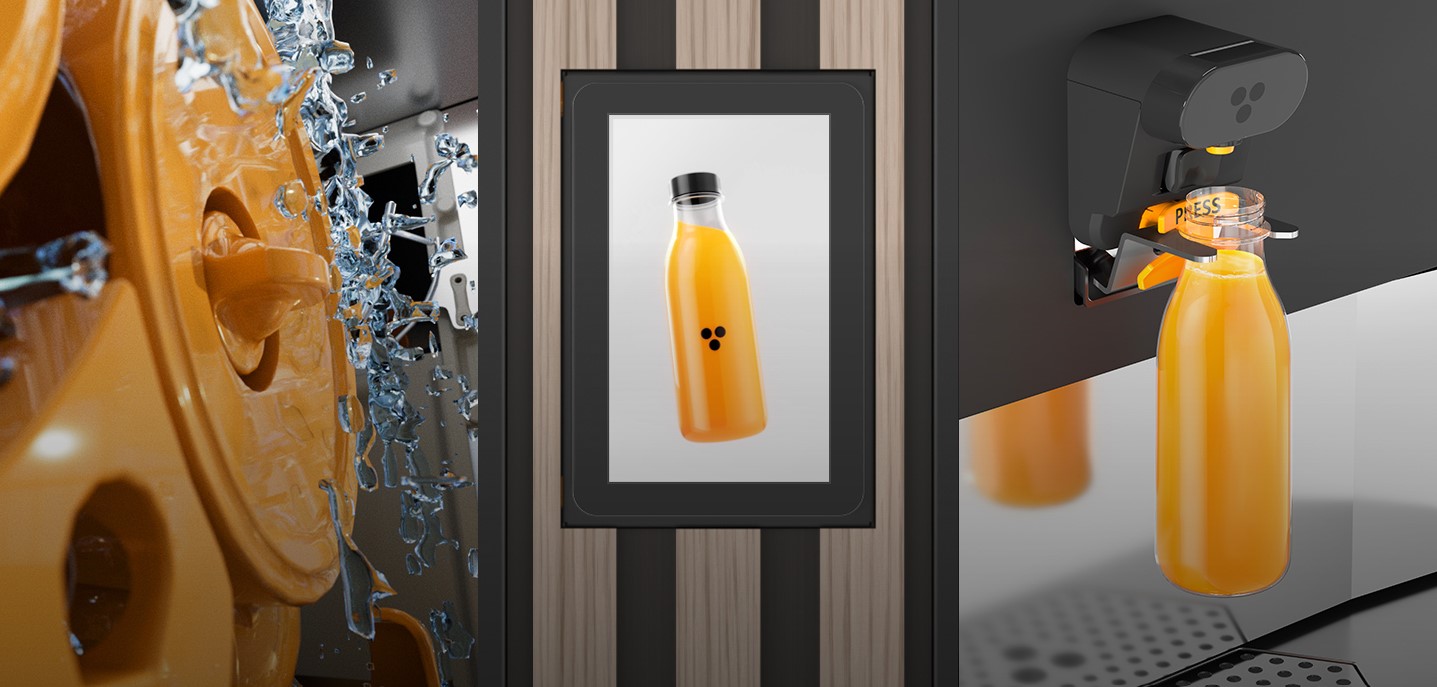
Design thinking exploration
From Insight to Innovation
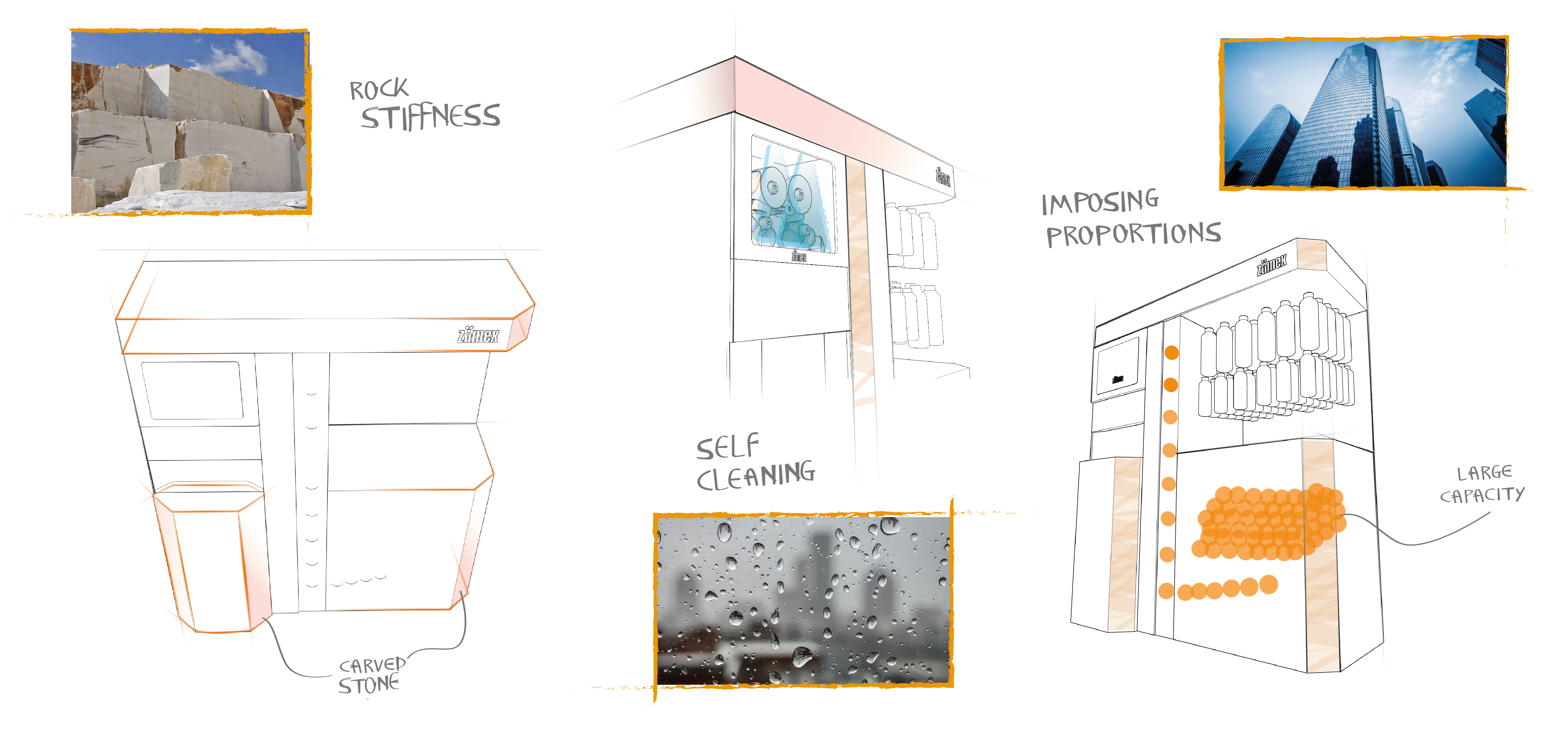
The project started in the field, not in the studio. Through interviews with food retail operators across different environments, we mapped the full user journey — from setup to end-of-day shutdown. One friction point kept surfacing: cleaning. Manual, time-consuming, and inconsistency-prone. Something the industry had normalised as unavoidable. That insight became the brief. Back in the studio, the team explored multiple scenarios through sketching and rapid ideation — questioning not just how to simplify cleaning, but whether the machine itself could take full ownership of the process. That reframe changed everything.
What followed was an unconventional structural decision: rather than handing off a concept brief to R&D, I brought the engineers into the innovation team during the exploration phase itself. They stress-tested ideas against real technical constraints in real time — opening possibilities we wouldn’t have found through a traditional handoff. That cross-functional integration, sustained across months of iteration, is what made the patented self-cleaning system both technically viable and genuinely seamless for the operator.
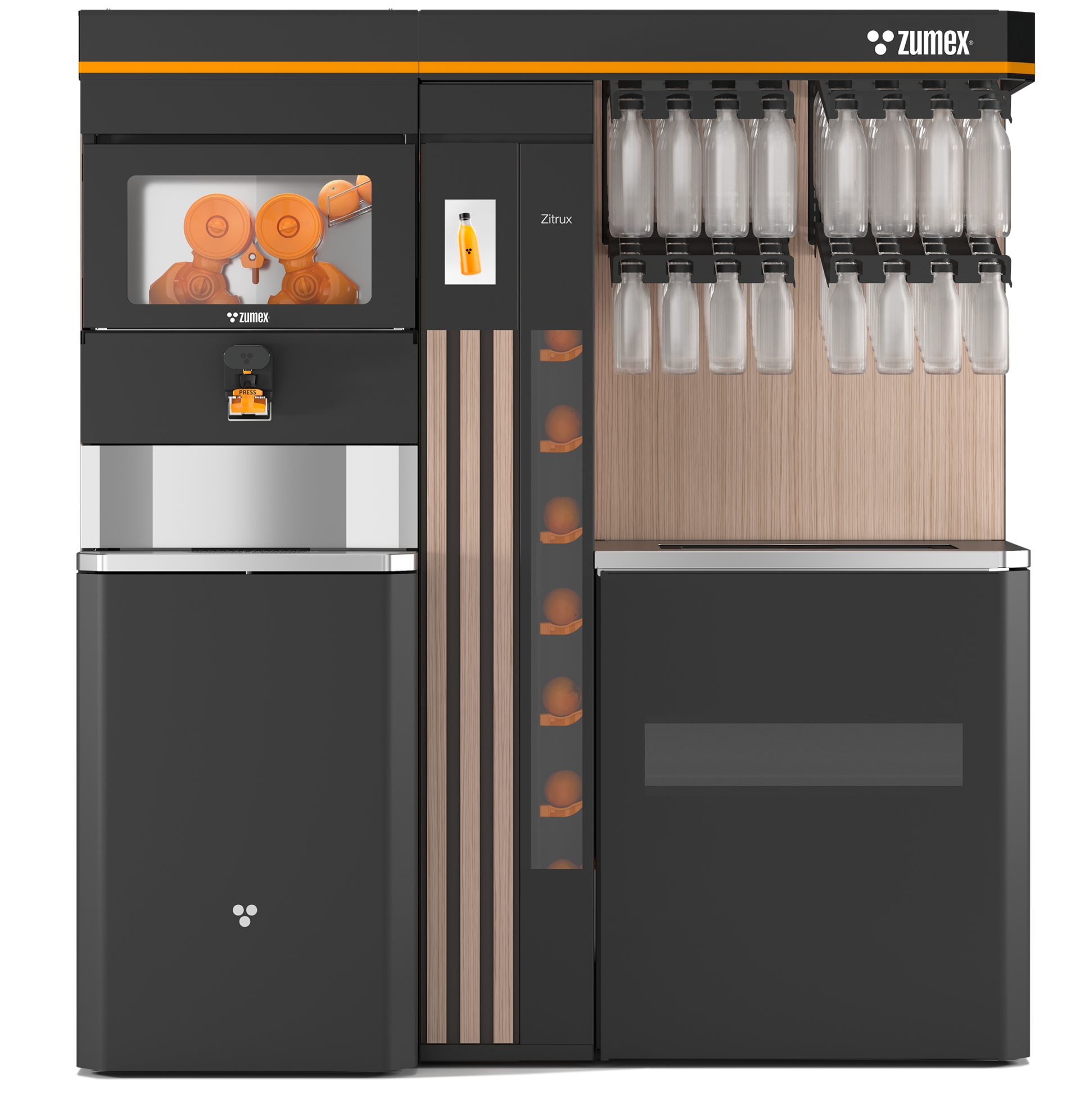
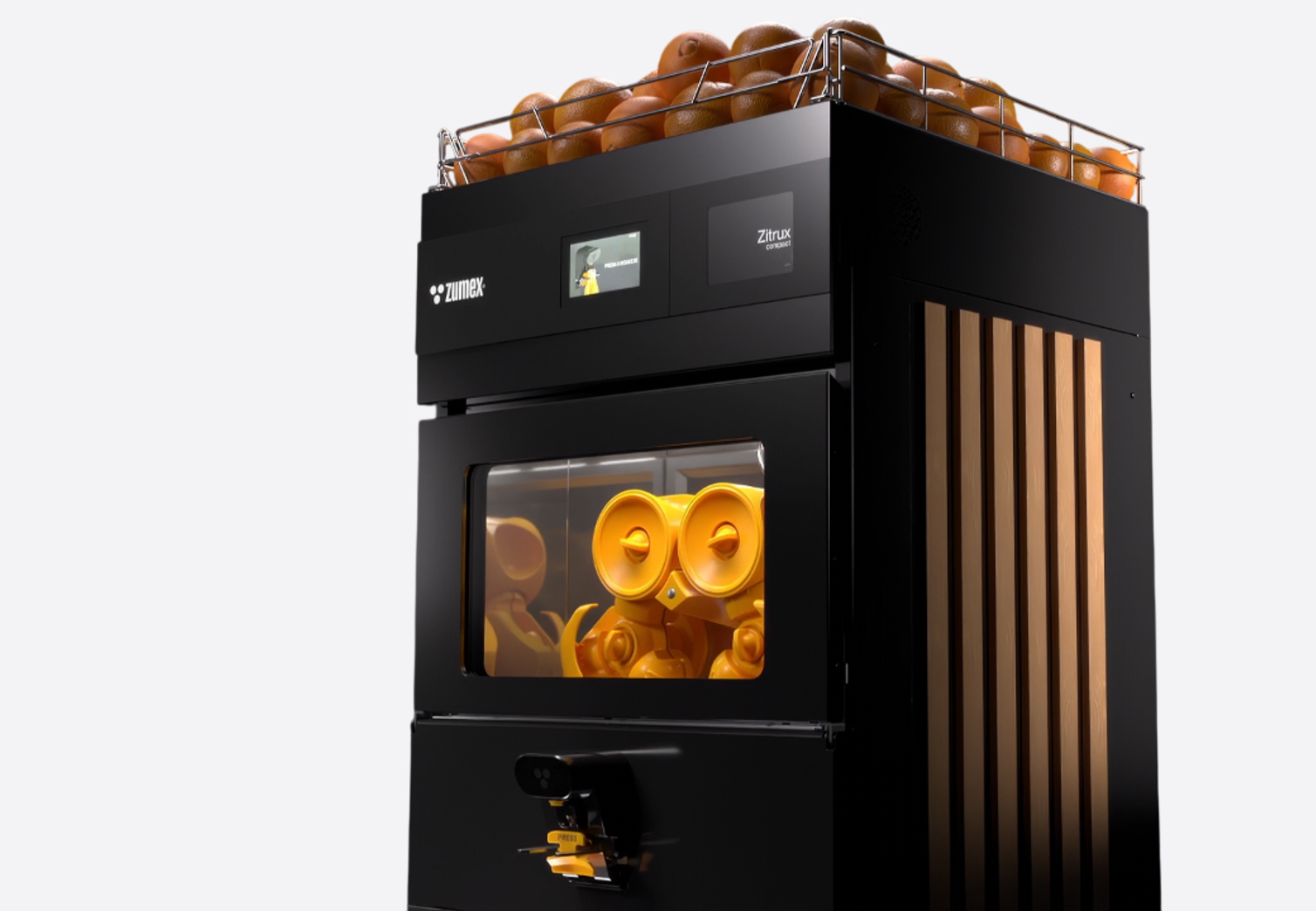
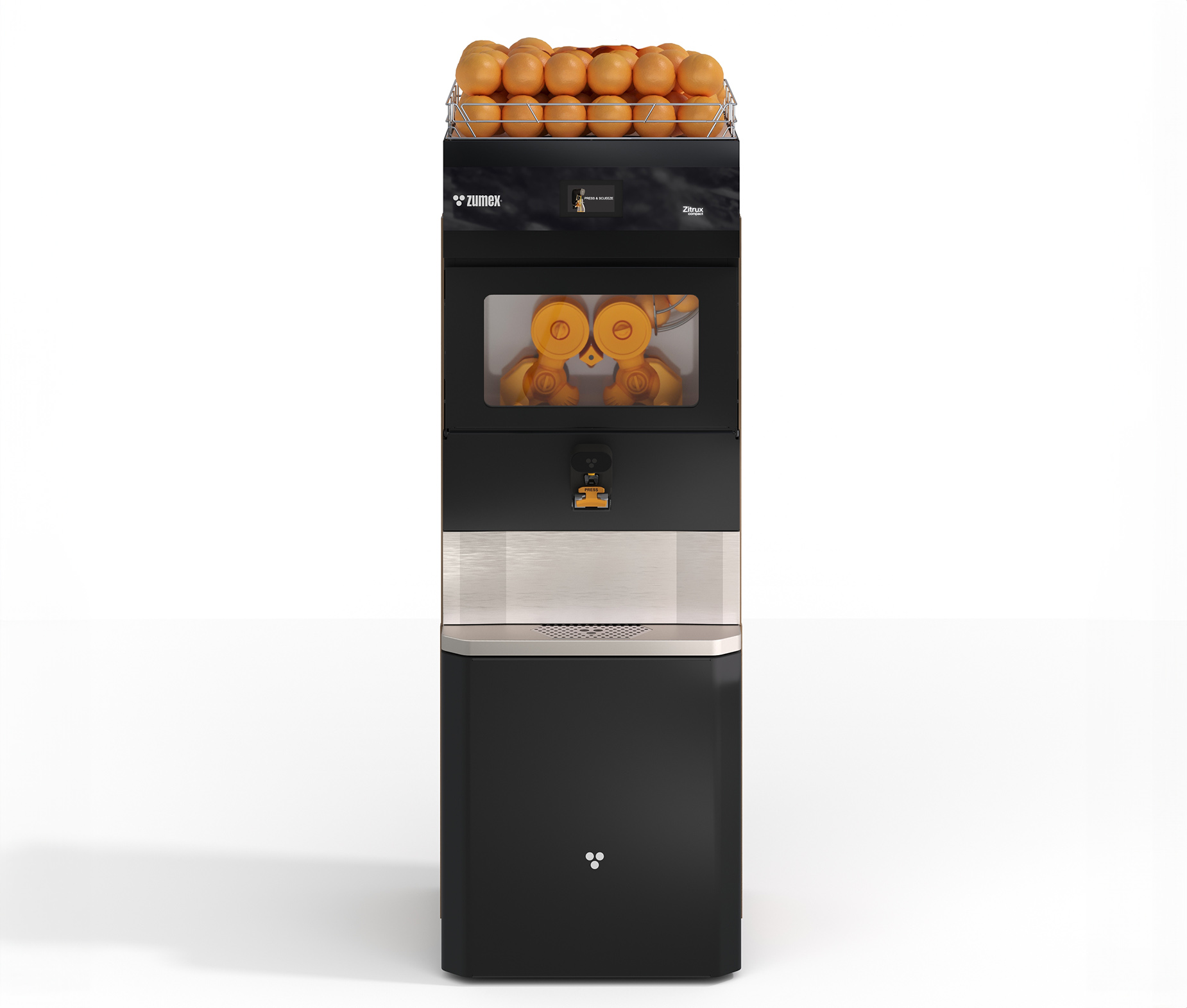
Three years after the first user interview, Zitrux launched as the world’s first self-cleaning, self-sanitizing professional juicer.
Designed Around the Experience
User-Centric Innovation for Food Retail
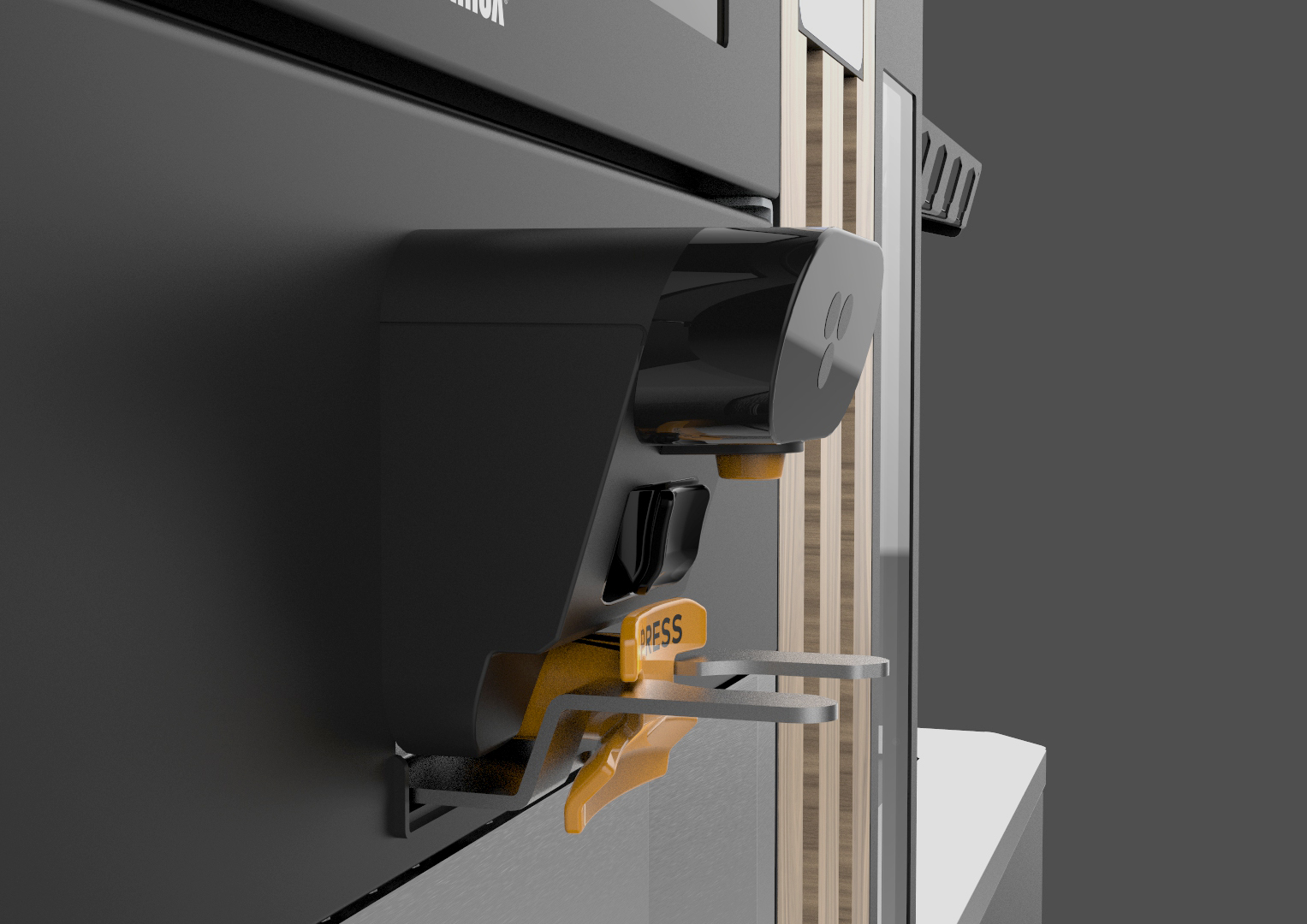
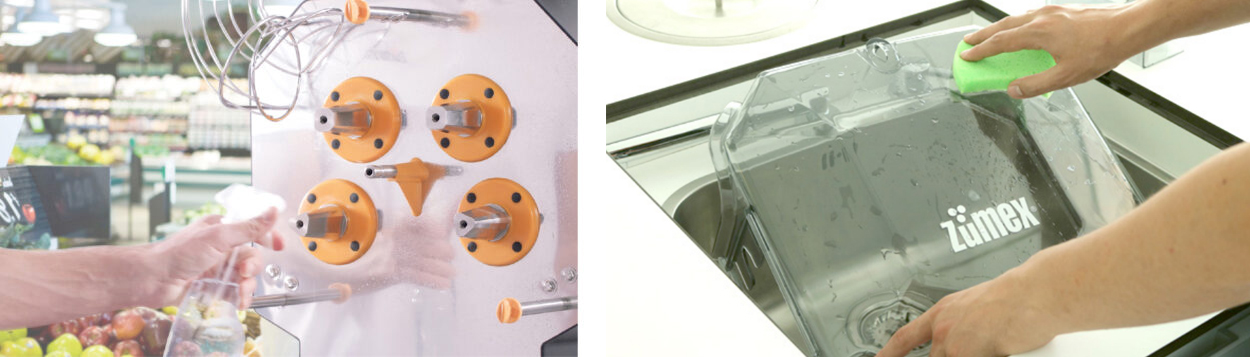
Zitrux was conceived with one priority in mind: the operator. From the early research phase, the team focused on identifying the ideal interaction between people and machine — ensuring the solution would be not only effective, but accessible, intuitive, and ergonomic.
The result resolves the main pain points previously faced by food retail operators — from complex cleaning routines to awkward, inefficient usage — and delivers a frictionless experience for staff and an approachable interface for end customers.
Its integration with Zumex Connect technology brings an added layer of intelligence: real-time performance monitoring and data-driven maintenance that keeps operations running with minimal intervention.
This is what happens when design, engineering, and user empathy come together with a clear purpose.
A new category. A global footprint. And a product still expanding.
This innovation created a new category in the market. Zitrux didn’t enter a market. It created one. By solving a problem the industry had accepted as inevitable, Zumex moved from being a hardware manufacturer to a full-service fresh juice solution provider — combining autonomous operation, real-time connectivity, and a patented hygiene system that competitors are still catching up to.
The product launched to international attention at Euroshop Düsseldorf, the world’s leading retail trade fair — the right stage for a product redefining a category. Since then, Zitrux has been adopted across food retail and foodservice operations in the United States, Europe, and Australia, with Metro Canada among its early flagship clients. The expansion is underway.
Zitrux proved that the most powerful brief isn’t “make it better.” It’s “question why it works this way at all.”